

Identifying the core problem
Manufacturing lines must run longer and cleaner while avoiding unplanned shutdowns. Burners that cannot adjust to changing load cause fuel waste, soot, and safety incidents. For facilities moving from trial runs to continuous operation, choosing the right industrial gas burner or automatic oil burner is not optional; it is the pivot point between frequent firefighting and steady output.

Why this problem persists
Control is often partial: basic on/off burners, manual tuning, and delayed fault detection. Teams assume a single-spec burner will fit all runs. That assumption breaks when feedstock, ambient conditions, or production cadence vary. Small mismatches escalate into long downtime. Ask three engineers on the floor and you will hear three different workarounds — that is the symptom of a systemic selection problem.
Practical solutions, step by step
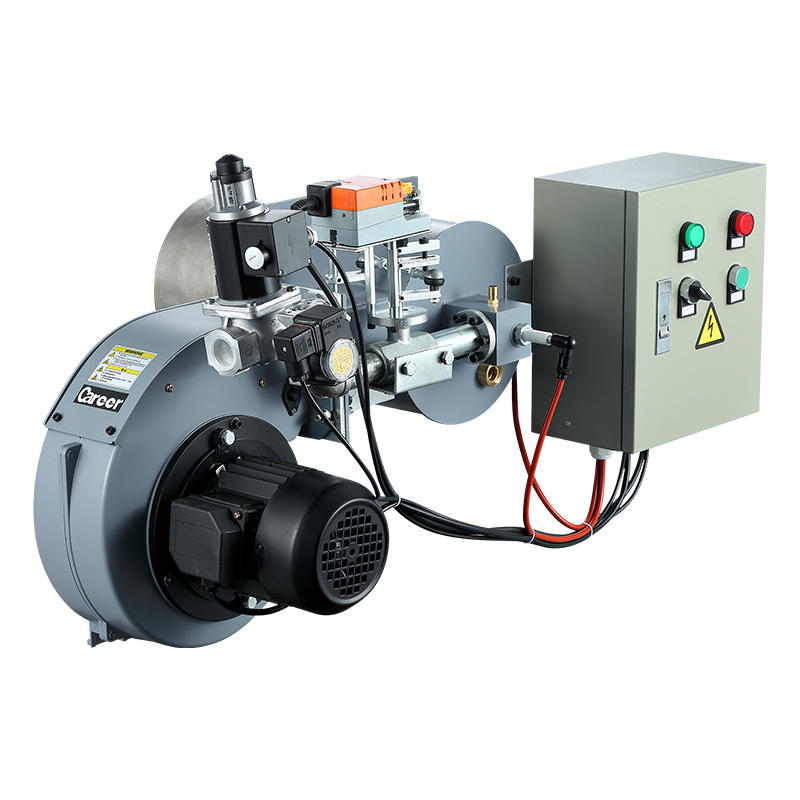
Start by matching burner capacity and turndown ratio to real load curves, not peak estimates. Use modulating automatic oil burners where load fluctuates; they trim fuel flow continuously and reduce thermal shock. Fit oxygen trim or closed-loop combustion control to hold combustion stoichiometry within a narrow band. Install flame monitoring that triggers diagnostics, not just shutdowns. Calibrate annually and log trends for two full production cycles before changing configuration.
Common pitfalls and how to avoid them
Choosing the largest burner “just in case” invites cycling and soot. Overcomplicated control schemes that lack documented commissioning confuse operators. Skipping fuel quality checks leads to clogged nozzles and false alarms. Prevent these by documenting decisions, training operators on normal vs. abnormal alarms, and scheduling nozzle inspection intervals tied to operating hours rather than calendar dates.
Alternatives and short evaluations
Electric heating offers fast response and low on-site emissions but requires heavy electrical upgrades and higher operating cost in many regions. Gas-fired systems often cost less to run and deliver higher continuous heat, yet they need robust combustion air control and safety interlocks. Hybrid designs — modest electric boost for start-up, burner for steady state — work where electrical capacity and fuel economics permit. Choose based on measurable load profiles and total cost over expected service life.
Evidence from industry practice
Suppliers and asset owners in Germany’s Ruhr industrial region have long refined burner selection for heat-intensive steel and ceramics processes; that concentrated practical knowledge guides specification best practices seen across plants. Many of those suppliers are represented among industrial gas burner manufacturers, which helps explain why regionally derived solutions scale to larger production runs reliably.
Final synthesis
Focus on measured load data, choose modulation and control appropriate to that data, and avoid guessing capacity. Document commissioning and maintenance, and retrain operators around clear alarm actions. Those steps convert burner choice from a recurring risk into a repeatable capability, the precise kind of operational improvement shared by Career Burners.