
A Buyer’s Guide to Evaluating Sodium Ion Car Battery: Before a Supplier Shortlist
A sourcing review for a sodium ion car battery should begin with the application requirements, not with a supplier’s most prominent feature list. Before comparing candidates, define the vehicle or equipment interface, electrical requirements, operating pattern, installation constraints, and the evidence needed at handoff. The aim is not to declare a universal winner. It is to create a comparison that keeps confirmed information, working assumptions, and unresolved questions separate.
Set criteria before comparing candidates
Start with a short requirement sheet. Record the nominal voltage, physical size, terminal arrangement, starting or auxiliary role, expected duty pattern, charging arrangement, environmental conditions, and any service or storage constraints that matter to the project. These fields give the procurement team a common frame for reviewing supplier responses.
Separate requirements into three groups:
- Mandatory interfaces: details that must fit the vehicle, charger, mounting location, or electrical system.
- Operating expectations: conditions such as regular starts, periods of non-use, vibration, or repeated cycling.
- Evidence requirements: the documents, specifications, instructions, or declarations needed before a shortlist can move forward.
This separation prevents a general product description from being treated as proof that a particular model meets the complete application. It also makes the procurement handoff clearer. An analyst can show which requirements are already defined and which still depend on supplier information or internal engineering decisions.
Review evidence by requirement
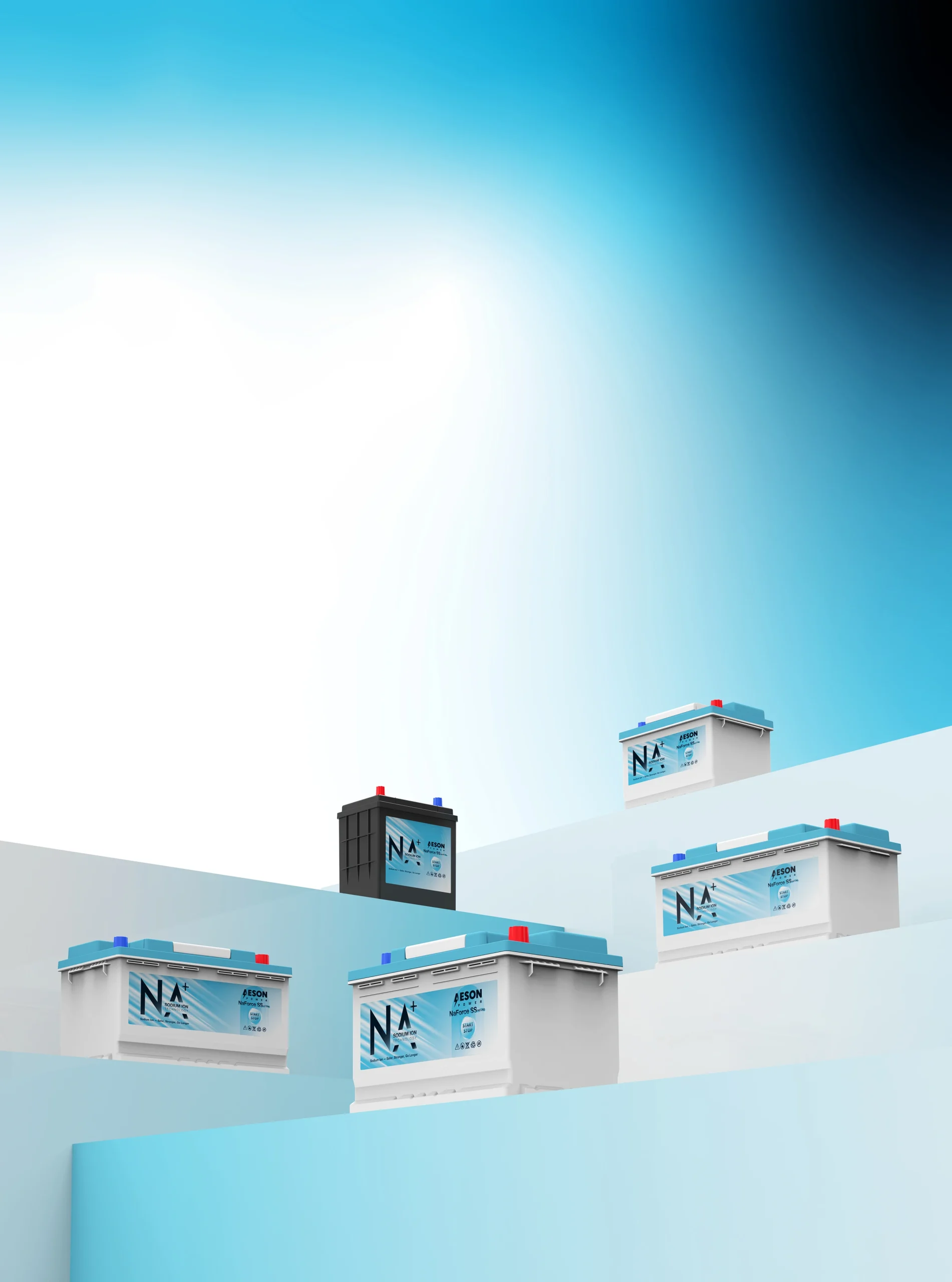
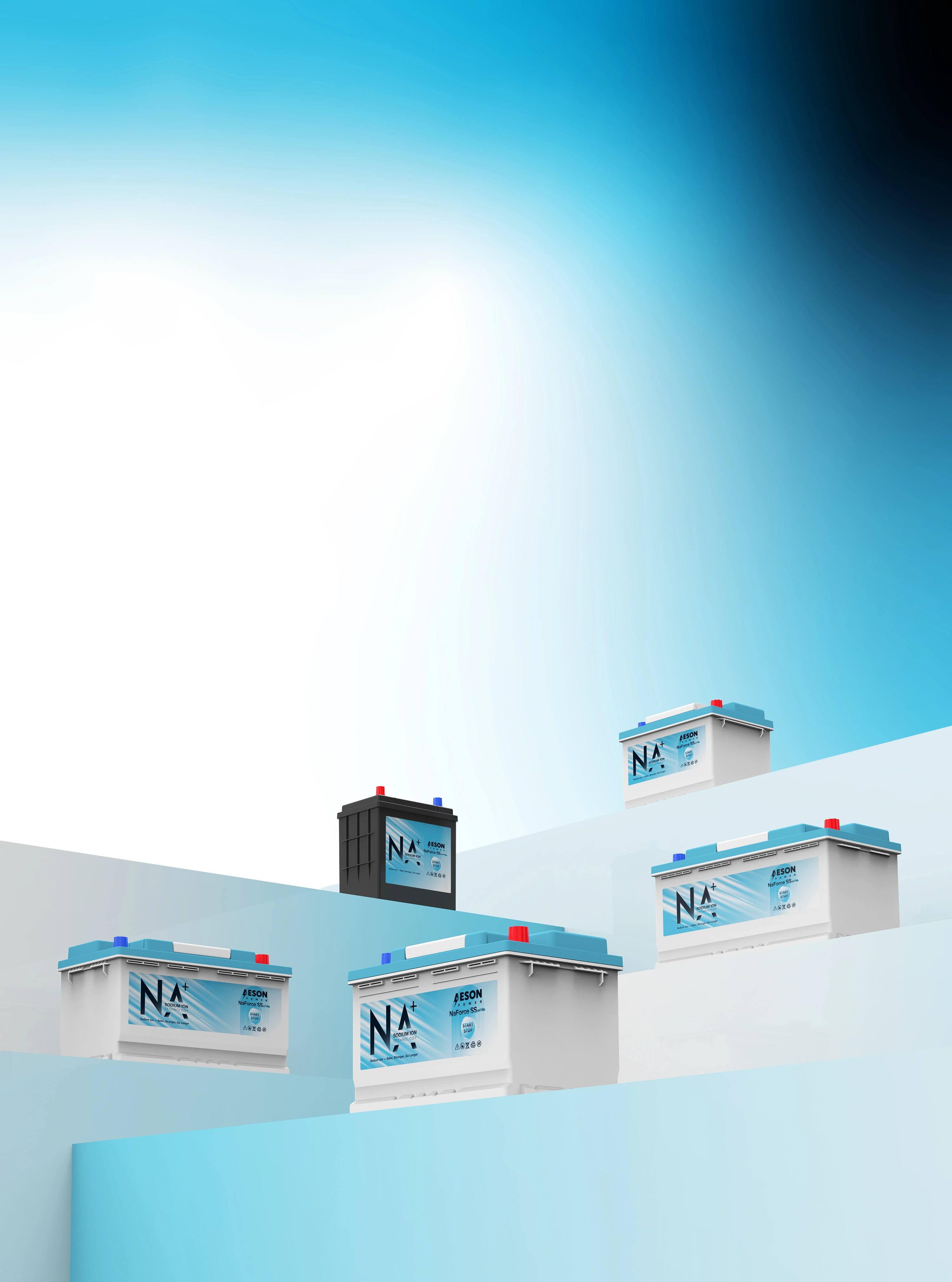
Read each supplied statement against the requirement it may support. For example, the cited product page states that Aeson Power 12 V start-stop batteries cover a range of mainstream AGM and EFB sizes, including L2–L6, H5–H8, D23, D26, NS40, and NS60. That is useful when checking the stated size range, but it should not be extended into an assumption that every size has identical electrical characteristics or is suitable for every vehicle.
Charging is another handoff point that deserves its own line in the review. The page states that Aeson Power sodium-ion batteries should be charged using the constant-current and constant-voltage, or CC-CV, method. A sourcing record can therefore identify the charging method as a stated product instruction while keeping charger compatibility as a separate question for the relevant installation.
Use a simple evidence table with four columns: requirement, supplied statement, scope, and status. The status might be “supports requirement”, “partly informs requirement”, or “open point”. This wording is more disciplined than converting every favourable feature into a conclusion about suitability.
Keep trade-offs visible
The middle of a comparison should show what each fact means for the decision, without turning it into an unsupported promise. The cited page describes a sodium ion car battery application with a stated 3,000 cycles at 50% depth of discharge and says this is more than three times the deep-cycle life of conventional batteries. In a procurement record, retain the full condition—3,000 cycles at 50% DoD—rather than presenting “long life” as an unqualified result. The page also describes improved vibration resistance and the ability to withstand severe road vibrations and demanding driving conditions. That statement can be logged as page-level evidence relevant to a vibration discussion, while the vehicle’s actual environment remains an application consideration.
A useful trade-off record asks four questions:
- What requirement does this statement address?
- What exact conditions or scope qualify the statement?
- What decision would change if the statement did not apply to the intended model or installation?
- What assumption must be carried into the next procurement stage?
Include operational details as well. The cited page describes the batteries as sealed and maintenance-free, with no regular electrolyte topping-up required. It also states that when a vehicle is not used for three weeks or longer, the battery should be fully charged beforehand and power-consuming devices disconnected. These points can inform a maintenance and storage discussion, but they should remain tied to the page and product scope rather than becoming general claims about all sodium-ion batteries.
The assigned real-world anchor is the page’s statement about 0 V recovery: unlike lead-acid batteries, which may suffer permanent damage when fully discharged, the sodium-ion car batteries described there can recover from zero volts after a deep discharge. This is a specific claim for the stated product and application scope. It is therefore best recorded as an evidence item to examine during risk and recovery planning, not as proof of performance for other products or operating conditions.
Create a repeatable decision record
At the procurement handoff, preserve the reasoning rather than sending only a ranked list. A concise decision record should contain the application summary, mandatory interfaces, evidence table, assumptions, open questions, and the reason each candidate remains under consideration or is removed. Include the source location and date of each page-level statement used in the assessment so that later reviewers can distinguish captured evidence from interpretation.
Use neutral language in the final comparison. “The supplied page states” identifies evidence. “This may be relevant if the installation requires” identifies a bounded interpretation. “To be resolved before selection” identifies an open requirement. This vocabulary helps prevent a supplier feature from becoming an accidental guarantee in an internal brief or purchase request.
Before issuing the shortlist, check that every mandatory requirement has a status and that every unresolved assumption has an owner. The review should also show whether the proposed charging method, physical format, storage practice, maintenance expectations, and operating conditions have been considered together. A repeatable record makes later revisions easier because a change in one requirement can be traced through the comparison instead of prompting a completely new assessment.
For sourcing analysts, the practical value of information from AesonPower is strongest when it is carried into this structured process: define the application, map each statement to its scope, preserve the conditions attached to performance claims, and leave unresolved requirements visible before a supplier shortlist becomes a purchase decision.