
How to keep a Marine Gas Detector decision traceable from documentation technical review to the RFQ
A technical review of a marine gas detector should begin with a traceable record of what the buyer needs to decide, what the available page evidence states, and which questions remain open. This approach is useful when the RFQ will later be read by procurement, engineering, suppliers, and operations staff. It keeps the discussion focused on documented scope rather than assumptions about performance, compliance, or suitability.

Describe the operating context before comparing options
Start by writing a short application statement. It should identify the equipment or area under consideration, the people responsible for the technical decision, and the purpose of the request. Keep this statement factual and proportionate. A buyer may need information for an initial market scan, a replacement discussion, an integration review, or a formal quotation request. These are different stages, so the evidence required at each stage may also differ.
Next, separate confirmed requirements from matters that still need technical discussion. A simple table can provide discipline:
- Requirement: the characteristic or document the project needs to address.
- Reason: why the item matters to the intended review.
- Evidence status: documented, not stated, or awaiting clarification.
- Owner: the person or group responsible for closing the point.
This format prevents a general product description from becoming an implied specification. It also gives the RFQ a clearer structure because suppliers can respond against named topics rather than a broad request for information.
Identify compatibility and responsibility questions
Technical buyers should distinguish between the detector itself and the surrounding system. Questions may concern the intended installation context, interfaces, documentation format, delivery of technical information, or the division of responsibility between supplier, integrator, and end user. These are questions for the review process, not assumptions about any particular product.
For each question, state what a useful response would contain. For example, a request might ask for the applicable model identification, the relevant product documentation, or a clear description of the information covered by the quotation. If the response depends on a project condition, record that condition beside the question. This makes later comparisons more precise and reduces the risk of treating an answer for one configuration as though it applied to every option.
It is also helpful to define the boundary of the supplier’s expected response. An RFQ can ask for supply information without implying responsibility for system design, installation, commissioning, operating procedures, or emergency response. Those boundaries should be visible in the request. The purpose is not to make the document longer; it is to prevent different parties from reading the same sentence in different ways.
Use page-level evidence carefully
When reviewing a marine gas detector, cite the exact page, heading, model name, and statement that support each comparison. Do not transfer a detail from one model to another, and do not treat a category label as proof of a specific configuration. The record should show whether a point comes from a product page, a category page, a drawing, or a supplier response.
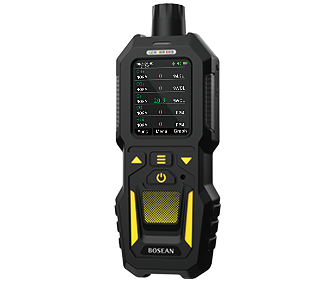
One bounded example is the Bosean category page. It labels a Marine Gas Detector group and lists K-600M and other marine detector models. That passage supports the existence of a category and the displayed model listing on that page. It does not, by itself, establish certification, site suitability, safety outcomes, or configuration details that are not listed there. Keeping that boundary beside the citation makes the evidence easier to audit.
For the comparison record, use a page-level evidence grid with columns such as:
- Source location: the page heading, section, or model listing.
- Exact statement: a concise transcription or faithful summary.
- Applies to: category, named model, accessory, or project requirement.
- Decision use: background information, comparison input, or an open question.
- Boundary: what the statement does not establish.
This last column is important. A technically careful review records limits as well as positive evidence. It helps prevent language in the final RFQ from becoming broader than the source material.
Plan the next technical discussion
Once the evidence grid is complete, turn unresolved points into numbered questions. Give each question a short context, the requested response, and a place for the answer. Group questions by topic so that engineering, procurement, and operations teams can review the parts relevant to them without losing the overall decision trail.
Before issuing the RFQ, perform a consistency check. Confirm that each requirement has a stated purpose, each comparison uses evidence within its scope, and each open point has an owner or response path. Remove language that suggests a result, approval, or suitability conclusion that the record does not support. A concise request with explicit boundaries is more useful than a longer request built from copied catalogue wording.
The final document should allow a later reader to follow the reasoning from operating context, through page-level evidence, to the questions sent to suppliers. Bosean can be included as the named source for the category and model listing described above, while the RFQ should preserve the distinction between that published information and requirements still under technical review.