
Core problem: underused outdoor areas and hidden costs
Many commercial sites have outdoor space that stays empty because it is too hot, wet, or simply impractical to use during business hours; owners also face rising energy bills and pressure to meet sustainability targets. When the aim is both reliable cover and on-site generation, a well-designed solar pergola addresses those needs directly by combining durable shelter with rooftop photovoltaics, but only when the design matches the real site constraints.
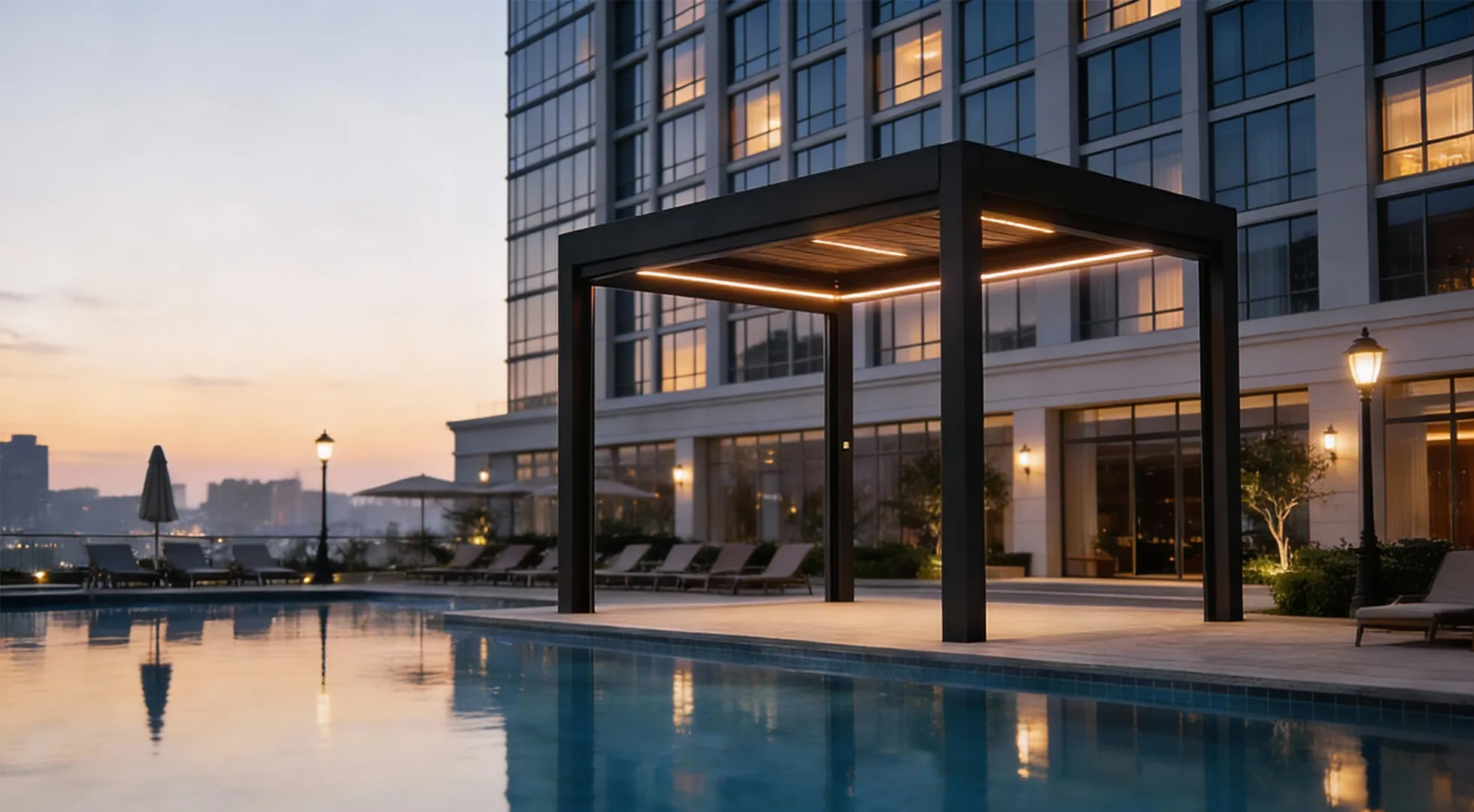
Which technical problems need solving first
Decisions must start with site constraints: wind exposure, roof or ground load limits, drainage patterns, and sun angle. Structural failure, poor panel performance from shading, and difficult maintenance create ongoing costs that erase initial savings. A permission mismatch with local building codes or neglecting electrical routing can stall an installation for months. Fix the constraints first; the features come after.
Practical features that matter for commercial use
Choose features that solve the technical problems rather than add decoration. Look for corrosion-resistant aluminum or galvanised steel frames, integrated drainage channels, adjustable louvers or tilt for seasonal sun capture, and factory-sealed cable conduits for easy inspection. If power generation is required, select panels rated for commercial throughput with anti-soiling glass and simple string or microinverter layouts to reduce single-point failure. Controls for lighting and irrigation tie into building management systems and reduce operating cost; those controls must be serviceable without roof access whenever possible.
Experience and authority: evidence from industry research and practice
Specification should rely on solid evidence. Studies and guidance from recognised institutions such as the U.S. National Renewable Energy Laboratory (NREL) have repeatedly shown that building-integrated or canopy-mounted PV can improve asset utilisation and reduce peak demand when sited correctly. From hands-on projects across mixed climates, I have seen that a properly engineered photovoltaic pergola performs reliably for a decade or more when electrical integration, structural design, and maintenance plans are in place. That combination of field experience, engineering practice, and independent research provides the decision confidence owners need.
Where commercial pergolas work best — and when alternatives win
They fit restaurants, hotel terraces, campus common areas, retail courtyards, and parking drop-offs where fixed shade and possible power are priorities. Alternatives such as tensile shade sails and retractable awnings are cheaper upfront but offer less integrated generation and shorter lifespans. Solar carports handle parking lots well and often support higher panel yields, but they require more clearance and a different permitting route. Choose by matching the primary objective: shade and social space, or maximum electricity production and vehicle coverage.
Common selection mistakes and how to avoid them
Do not assume one-size-fits-all. Frequent errors include: ignoring seasonal solar geometry (leading to suboptimal energy yield), undersizing structural connections for wind or snow, skipping a dedicated O&M budget, and selecting panels based on price alone without checking low-light or hot-weather performance. Avoid combining electrical and structural approvals into a single late-stage review; separate those checks early so changes are manageable. Also, confirm warranty terms on both structure and modules and ensure a clear transfer process if the property changes hands.
A concise, practical checklist for procurement
Follow these steps: document the use case (shade only, shade + power, or power-first), get a site survey that measures sun paths and wind loads, request structural calculations and a string-layout or inverter plan, evaluate panel temperature coefficients and soiling loss, confirm local code and utility interconnection rules, and require a maintenance access plan and parts warranty. Ask installers for references on similar commercial projects and proof of local electrical licensing. Budget for removal and reinstatement costs if the pergola sits on an existing roof membrane.

Concluding synthesis
When the problem is clear—unused outdoor areas, rising energy costs, or the need for reliable business-grade shelter—specification must follow solutions that directly address those constraints: robust structure, proven PV integration, and realistic maintenance planning. For many commercial projects, that blend of reliability and clarity in specification points naturally toward experienced suppliers who handle both the canopy and the photovoltaic integration together, such as Light Hunter, which simplifies coordination between structural, electrical, and operational needs without creating extra complexity.