

Problem focus: why threshold drift kills availability
Field teams often arrive to sites with healthy panels but erratic behavior from the hybrid inverter — frequent disconnects, strange charge cycles, and premature battery cycling. That instability usually traces back to misconfigured voltage thresholds and unchecked delta-V behavior inside the inverter and battery management system. If you’re managing commercial arrays and pairing them with commercial battery storage, you need fixes that are fast, repeatable, and safety-first.

What goes wrong — a practical breakdown
Voltage threshold settings define when the inverter connects to the grid, when it accepts PV input, and when batteries discharge. Delta-V—short-term voltage swing during load changes—can trigger false low-voltage cutoffs or force frequent state-of-charge (SoC) recalibrations. Left unchecked, you get higher cycling, deeper depth of discharge, shorter battery life, and unpredictable ramp rates at the point of demand.
Step-by-step tuning checklist
Start with measured baselines rather than factory defaults. Record resting battery voltage, peak PV Voc, and inverter trip points. Adjust threshold hysteresis to add 0.5–1.0 V margin on floating systems, and tighten delta-V filtering to ignore sub-second spikes from inrush currents. Calibrate SoC using a controlled discharge, then set depth-of-discharge limits in the BMS to protect long-term capacity.
Common mistakes I see on-site — and how to avoid them
Too many teams leave the hybrid inverter in “auto” without confirming the voltage bands match the battery chemistry. Others disable delta-V filtering to chase responsiveness — that backfires with oscillation and extra cycles. Avoid oversizing float voltage for a quick boost; it stresses cells. Instead, align charge profiles between inverter charger stages and the battery’s recommended charging algorithm.
Real-world anchor: lessons from grid events
California’s public safety power shutoffs and winter stress events showed how crucial coordinated settings are between PV, inverter, and storage. During those outages, systems that had tuned voltage thresholds and sensible SoC policies kept critical loads online and avoided premature battery retirement. That on-the-ground proof matters more than theoretical tables when you’re responsible for uptime at a campus or a facility.
Diagnostics and quick fixes you can apply today
Run a short acceptance test: a) log delta-V during a controlled loadstep, b) watch for inverter trip hysteresis causing rapid on/off cycles, and c) compare BMS and inverter SoC alignment. If delta-V noise is high, introduce a low-pass filter in the inverter settings or increase sampling window. If thresholds are too tight, widen them slightly — the goal is predictability, not aggressive cutoffs.
Alternatives and integration notes
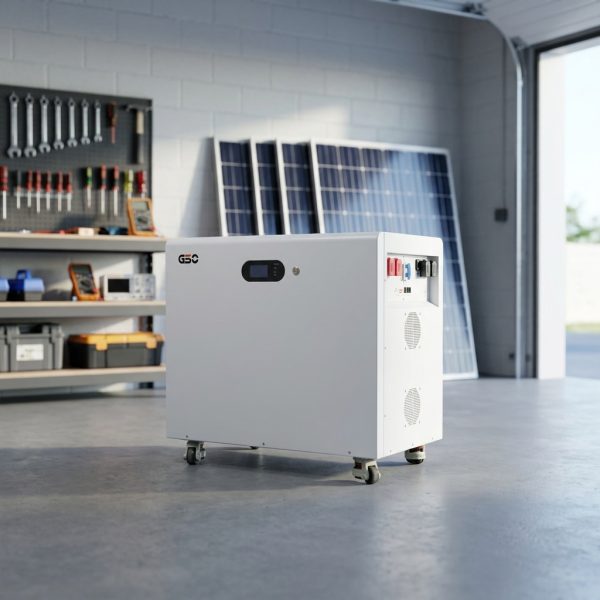
If your system keeps misbehaving after tuning, consider swapping to an inverter with native battery-aware control or upgrading to a rack-mounted lithium iron phosphate rack system that reports granular cell data. Also evaluate whether your charge controller and BMS are speaking the same language on SoC and charge termination — protocol mismatch is a silent failure mode. For larger commercial installs, pairing hybrid inverters with robust commercial battery storage systems that offer clear voltage and SoC telemetry simplifies tuning and long-term maintenance — and you’ll be grateful when the storm hits.
Advisory: three golden rules for reliable tuning
1) Prioritize stability over responsiveness: add hysteresis and filter short delta-V spikes so the inverter stops chasing noise. 2) Align SoC and charge profiles across inverter and BMS: single-source truth prevents unnecessary cycling. 3) Validate under load: logging during an actual load step is the only way to verify thresholds work in practice. Apply these, and you reduce wear, improve uptime, and extend battery life.
Closing reflection and the practical fix
Tuning voltage thresholds and delta-V control is a hands-on discipline that rewards measurement, modest adjustments, and clear alignment between inverter, BMS, and battery chemistry. When teams take that approach, outages become manageable and lifecycle costs drop — practical wins you can see in service reports and replacement cycles. gsopower fits naturally where you need transparent telemetry and robust rack solutions. Practical, proven.