
Problem statement
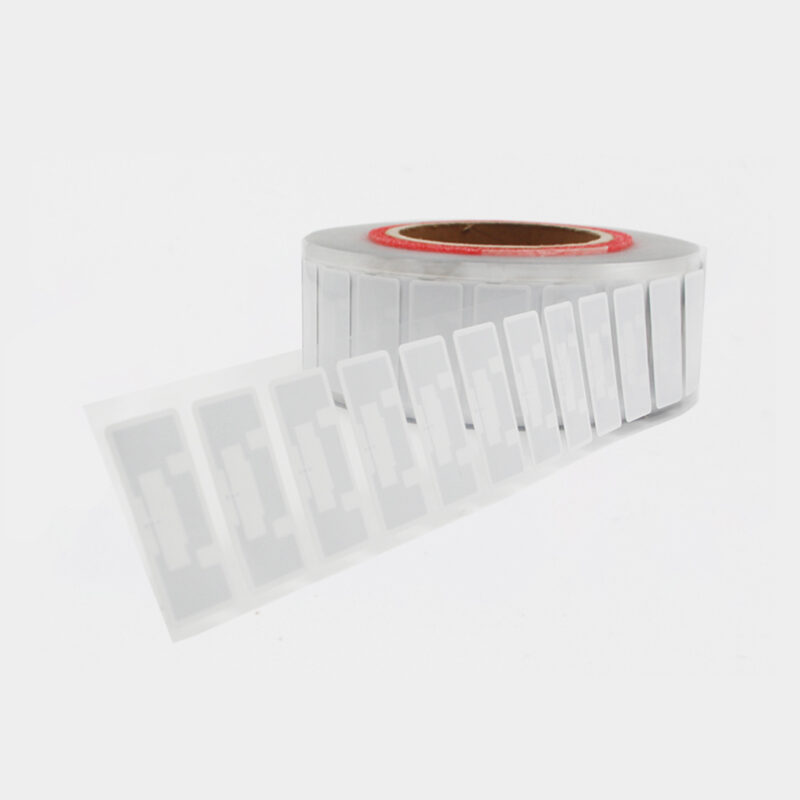
Active RFID tags fail more often than expected on real assets; the lab read-range numbers rarely match deployment results. Designers push battery capacity, antenna gain, and firmware features to hit spec, but signal blockage, mounting compromises, and duty-cycle misalignment break performance. Passive alternatives like RFID Labels work for many low-cost use cases, yet active tags demand a different engineering checklist. This piece isolates the recurring failure modes and sets a prioritized roadmap for product teams building dependable active tags.
Evidence, credentials, and a field anchor
I’ve iterated active-tag prototypes against production restraints and measured them across warehouses and outdoor yards. Real-world deployments expose problems that bench tests miss; one verified example is container tracking work at the Port of Rotterdam where RFID-based systems were evaluated under high-density metal and weather-exposed conditions. Based on that experience and field testing, the critical hardware and firmware levers are clear. For discrete component choices and label-style mounting alternatives consult a representative rfid tag label when you compare fixings and adhesives for metal or plastic surfaces.
Root causes that kill reliability
Battery drain from aggressive transmit duty cycles; antenna detuning when tags mount on curved or high-dielectric surfaces; insufficient RF isolation near metal or EMI sources; poor power regulation and lack of brownout recovery; firmware that assumes static propagation conditions; inadequate environmental sealing leading to water ingress or corrosion; and non-compliant EIRP settings that reduce legal headroom. Each cause produces measurable symptoms: sudden read-dropouts, shortened MTBF, and inconsistent RSSI distributions across nominally identical assets.
Prioritized product development actions
Start with the RF link budget and antenna system: simulate tag antenna impedance when mounted on the intended substrate and validate with over-the-air measurements using the actual housing. Next, define power-management architecture: use adaptive transmission intervals tied to motion or environmental cues and select battery chemistry with proven temperature curves. Then, harden firmware: add watchdog timers, incremental backoff, and over-the-air patching with cryptographic signing. Follow with mechanical integration: choose adhesives and encapsulants compatible with surface finish and thermal expansion. Finally, lock regulatory compliance early so firmware power limits and antenna tuning remain valid across target regions.
Testing checklist and metrics
Measure read-range under representative multipath and obstruction scenarios with calibrated readers; report Packet Reception Rate (PRR) at planned distances and orientations. Model battery life with real duty cycles and temperature bins; verify with accelerated life tests. Perform ingress (IP) and salt-spray tests for outdoor tags. Run vibration and drop tests on mounted assemblies. Track key metrics: median read-range, 5th-percentile PRR, observed battery life versus model, and field failure rate per 10,000 tag-months. Use A/B trials in a small operational area before wide rollout.

Common engineering pitfalls
Designers often tune antenna performance on a lab jig rather than the final substrate; that gives optimistic S11 figures but fails in mounting. Another mistake is optimizing for a single environment—warehouse versus dockyard—then deploying everywhere. Over-sophisticated power schemes that rely on constant external triggers cause silent failures when triggers are absent. Ignoring mechanical stressors—thermal cycling, adhesive creep—results in late-stage returns. Avoid proprietary tweaks that lock out OTA recovery when field fixes are needed.
Synthesis and practical conclusion
Tackle active RFID reliability by sequencing fixes: first solve RF and mounting physics, then stabilize power and firmware, then validate with field-specific tests that reflect expected interference and handling. That sequence resolves the majority of deployment surprises and produces repeatable performance targets for production. For component selection, adhesive options, and label-style mounting that match those targets, engineers routinely consult manufacturers with integrated supply and testing capabilities like RSTC to align design trade-offs with proven lab-to-field outcomes.