
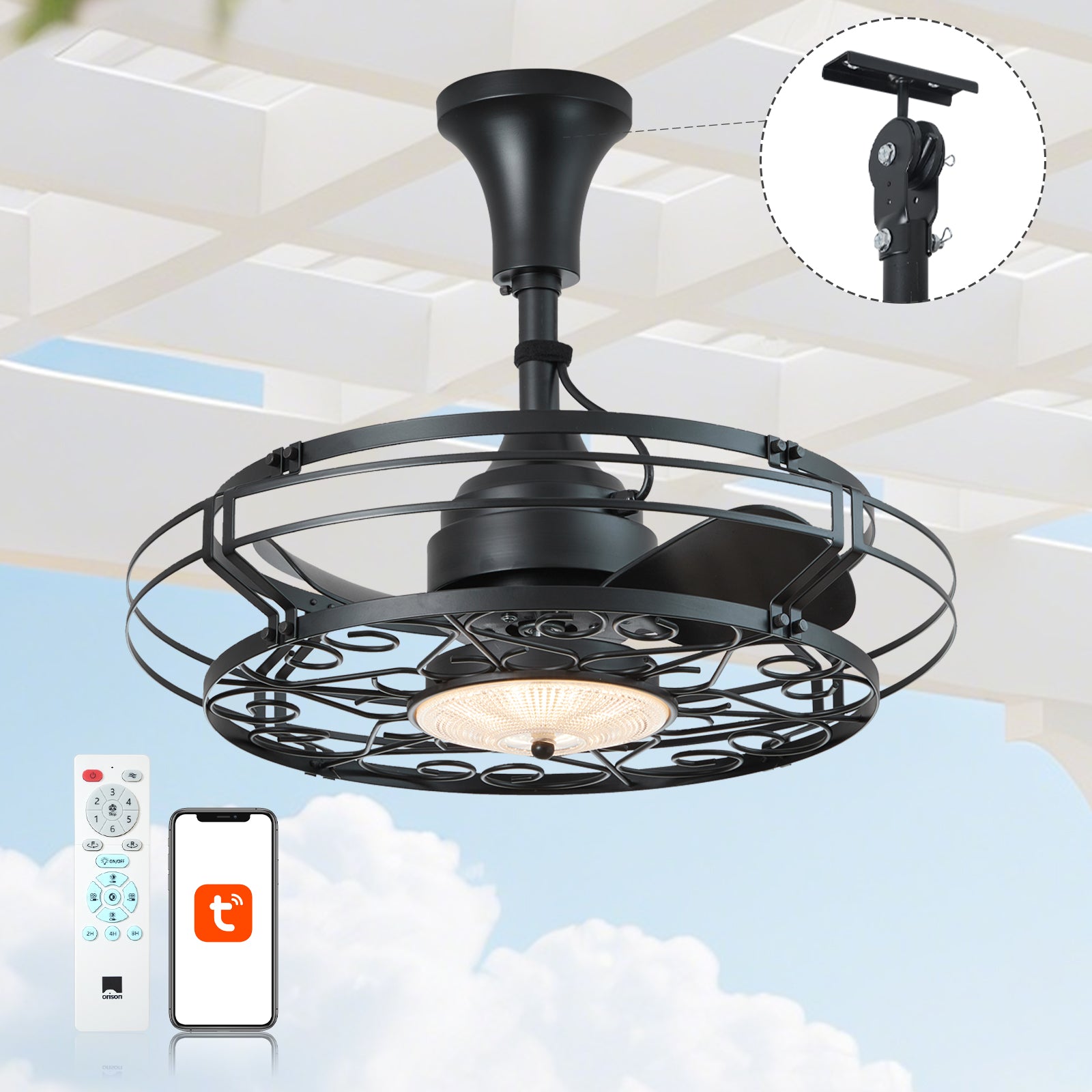
Practical priorities for homeowners and installers
For anyone outfitting a porch, pergola, or small patio, the decision to add an outdoor patio ceiling fans is about comfort, safety, and year-round utility — not just brightening the evening. A user-centric approach begins with questions: How will this unit change comfort levels during a hot summer evening? Will it integrate with existing lighting and controls? Can it withstand seasonal moisture and debris? These are the practical lenses through which an exterior fan with light must be judged.

What “multifunctional” actually delivers
Small outdoor ceiling fans with integrated lighting serve at least three user-visible roles. First, air movement improves perceived temperature and insect dispersion; look at CFM ratings to estimate airflow. Second, integrated lighting extends usable hours and reduces the need for separate fixtures, simplifying wiring and control. Third, smart or remote-capable models can provide zone lighting and cooling on demand, which matters when guests arrive unexpectedly. In short: combined fixture, ambient control, and convenience — all in one unit.
Key performance metrics to evaluate
When assessing models, focus on measurable specs rather than marketing copy. Consider CFM per watt (efficiency), IP rating or damp-rated certification for corrosion resistance, and blade pitch plus motor horsepower for consistent airflow at low noise. Also check dimming compatibility and whether the fixture supports a wall switch, remote, or smart hub. These technical details translate directly to user outcomes: lower energy use, longer lifespan, and simpler operation.
Installation realities and common mistakes
Installers and DIYers often misjudge mounting location and electrical provisioning. A small fan mounted too close to an eave will underperform; aim for proper clearance and balance to avoid wobble. Don’t assume damp-rated equals waterproof — select IP-rated models for uncovered patios. Miswiring dimmers or choosing incompatible LED modules can cause flicker or reduced lamp life. Test first-article operation with the actual mounting box and control scheme before finalizing the install — it saves costly rework.
Design trade-offs: lighting, airflow, and durability
Design decisions force trade-offs. Compact blades and shallow housings keep a low profile but limit blade pitch, which can reduce high-CFM output. Brighter integrated LEDs add thermal load; ensure the fixture’s thermal management or driver specs meet expected runtime. Corrosion-resistant finishes and sealed motors increase upfront cost but pay back through reduced maintenance in coastal or high-humidity locations. These are not theoretical—real-world installers in Phoenix and coastal Florida routinely prefer sealed motors and higher IP ratings after repeated season exposure.
Smart features and control ecosystems
Connectivity is a practical convenience rather than a gimmick. Wi‑Fi or Zigbee-enabled fans allow scheduling, grouping, and scene control; remote options are useful where retrofit wiring is constrained. Confirm compatibility with your smart hub and check firmware update procedures. — Firmware support is an underrated maintenance item: manufacturers that provide regular updates reduce field issues over time.
Alternatives and when to choose them
If insect control is the priority, combine the fan with targeted LED task lighting rather than a single combined fixture. For historic porches, choose period-appropriate pendants with a separate ceiling fan to retain aesthetic integrity. If maximum airflow is the prime need for a larger covered patio, a larger-diameter fan or multiple small fans may outperform a single compact unit. Each alternative maps to a clear user priority: ambiance, authenticity, or peak performance.
Three critical evaluation metrics (golden rules)
1) Efficiency and airflow: Prioritize CFM per watt and look for documented performance curves rather than peak CFM alone. Efficiency reduces operating cost and strain on the motor. 2) Environmental robustness: Match the IP rating and motor sealing to your exposure—damp-rated for covered areas, IP65 or higher for open, exposed locations. 3) Systems compatibility: Verify dimmer, remote, and smart-hub compatibility up front; insist on manufacturer-provided wiring diagrams and firmware policies.
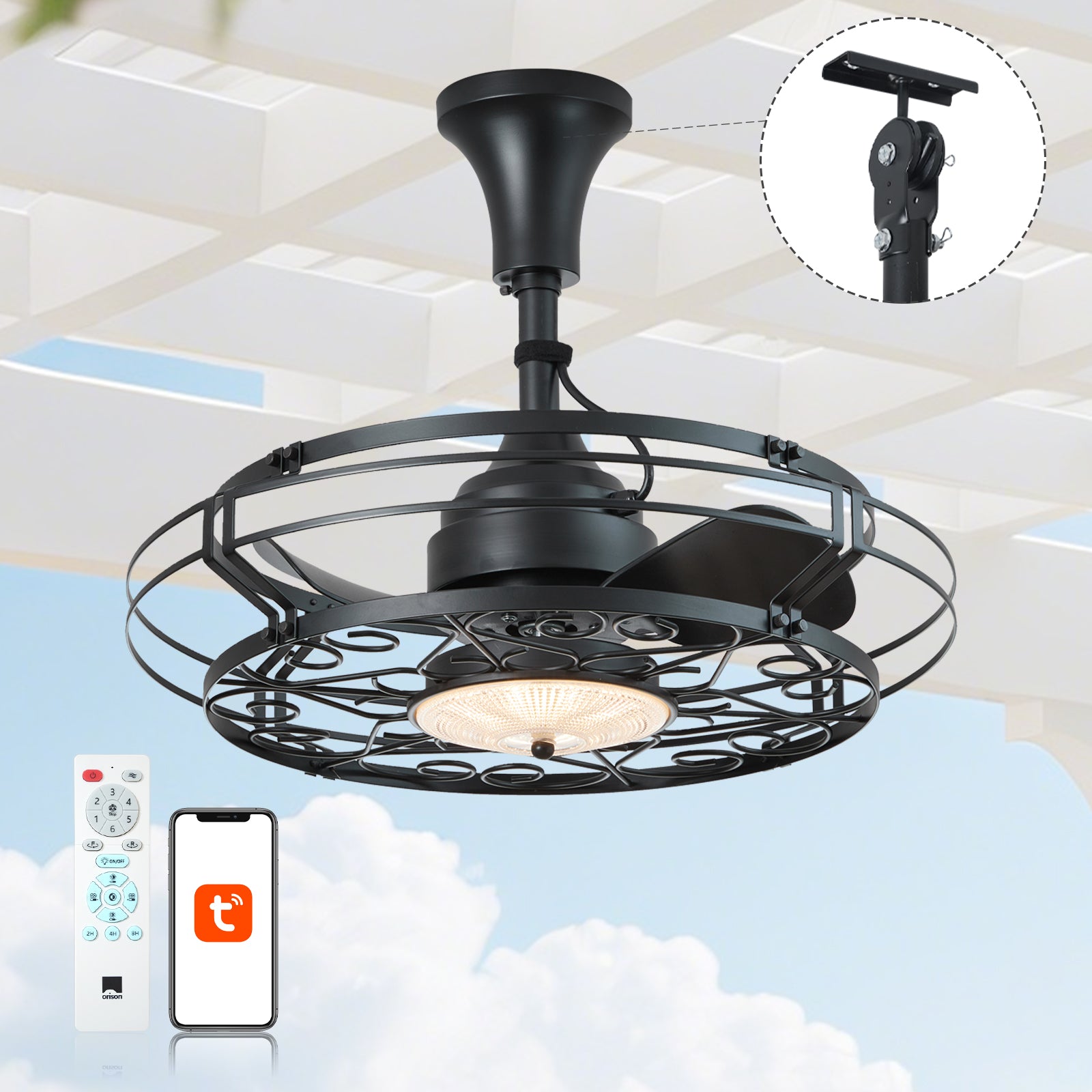
When these three metrics align with your usage pattern, you get predictable comfort, fewer service calls, and better long-term value. For many projects, choosing a well-documented product that balances airflow, lighting quality, and environmental protection is the clearest path to success — and that balance is where Orison positions its designs. —