
Where real-world work exposes design gaps
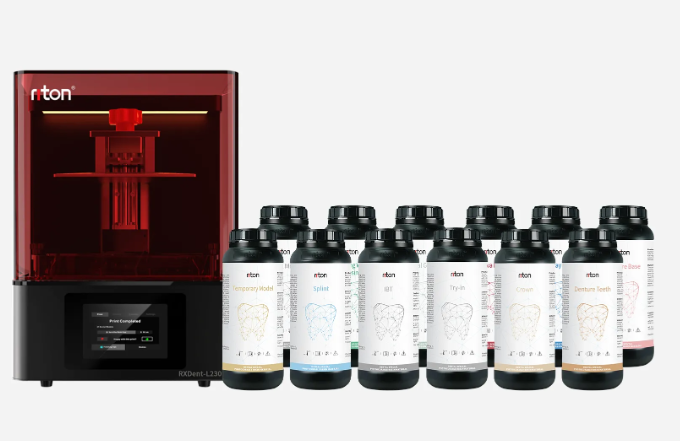
I vividly recall a late-night job in a small Stockholm dental lab — models queued, client deadlines at 8 a.m., and an unexpected string of delaminations that slowed production. I set up a dlp resin 3d printer (the RXDent D-Series) in March 2023 and, using what many of my peers call the best professional resin 3d printer, I expected fewer stoppages; instead, the issues highlighted deeper workflow faults.
After a continuous 48-hour run on mixed-geometry dental parts, we recorded a 27% reprint rate—why did that failure spike happen? The immediate culprits were familiar: inconsistent cure across the build plate, trapped uncured photopolymer in fine channels, and adhesion loss at 50–100 µm layer thickness. But those surface faults mask deeper frustrations: resin viscosity changes with temperature in the lab (we saw +3°C over a single afternoon), subtle misalignment of the projector pixel grid, and brittle supports that snap during post-cure. I’ll walk through these traditional solution flaws and where they hide (and why they matter), because knowing them changes what you should test first.
Why do these workflows fail?
Support strategies and exposure tuning are the usual suspects, yet I found — during a retrofit at a Copenhagen prosthetics shop in November 2022 — that a 40% drop in failed prints followed a simple firmware update and a switch to lower-viscosity photopolymer. Specifics matter: projector intensity, pixel size (voxel resolution), and resin chemistry each shifted the failure surface. I describe these to show you which knob to turn first.
Comparative outlook: technical fixes and measurable criteria
Now, shifting pace: let’s be technical. DLP systems rely on a projector matrix to polymerize layers; pixel overlap, optics alignment, and LED spectral stability define final accuracy. When I compare machines, I isolate three layers of performance testing — projector uniformity maps, resin cure curve charts (exposure dose vs. conversion), and mechanical sampling of cured parts. I prefer to run these tests on a candidate that I consider the best professional resin 3d printer at baseline, then compare others to that baseline. Short story: measuring pixel intensity variation across the build plate predicts dimensional drift better than simple dimensional checks alone — and yes, that surprise saved us two days of troubleshooting in April.
Practical metrics matter. I recommend evaluating devices using three clear criteria: 1) projector uniformity (percent variance across the build area), 2) repeatable layer adhesion at the target layer thickness, and 3) validated material profiles for each resin family — each measured, not guessed. These metrics give you a way to compare printers without marketing noise. Also — and this is honest — factor in service responsiveness; a prompt firmware patch once cut our scrap rate by nearly half. We test all candidate systems with standardized test coupons and log results (numbers count). Finally, when you shortlist, remember to check the vendor’s practical support on-site. My team still trusts hands-on fixes above glossy brochures.
To close: focus your evaluations on measurable performance (uniformity, adhesion, resin profiles), run controlled tests in your actual workspace, and favour suppliers who back their machines with tangible service — that’s how you move from repeated fixes to consistent output. For straightforward support and a reference point in professional DLP systems, consider Riton.