
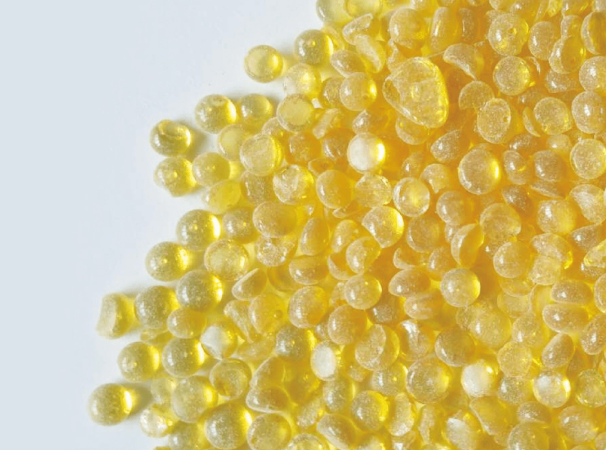
Comparative lead-in
Sourcing decisions for glycerol esters begin with measurable chemistry: acid value and volatility thresholds drive downstream behavior. Evidence-based comparisons of commercial-grade and high‑purity rosin glycerol ester show consistent trade-offs in stability, process yield, and end-use performance. Early sourcing choices hinge on raw-material consistency—see practical supply examples like rosin resin—and on whether the feedstock is straight pine gum or a fractionated derivative such as pine tree rosin.
Key parameters that matter
Acid value (mg KOH/g) is the primary indicator of free acid content in an ester product and correlates to shelf stability, corrosivity, and reactivity during esterification. Volatility thresholds—measured as mass loss at given temperature/time profiles—predict VOC emissions and thermal trimming losses during drying or compounding. In practice, manufacturers track acid value, viscosity, and saponification number because these three terms together explain how a given rosin glycerol ester will behave in mixing, curing, and storage.
How commercial-grade and high‑purity grades differ
Commercial-grade glycerol ester is typically produced with simpler purification steps. That yields lower cost and broader acid value ranges (often higher mg KOH/g), which can be acceptable for adhesives or coatings where minor residual acidity is tolerable. High‑purity rosin glycerol ester undergoes additional neutralization and filtration to reduce acid value and volatile impurities, tightening volatility thresholds. The consequence: improved color stability and reduced tackiness, but with higher processing costs and often lower overall yield per batch.
Operational production teardown — common mistakes
Manufacturers frequently underestimate the coupling between acid value and downstream saponification risk during alkaline formulations. Using a commercial-grade ester without compensating neutralizer load can cause soap formation and phase separation in emulsion systems. Another common error is ignoring volatility during drying cycles; residual low‑molecular volatiles condense on cold tooling, creating surface defects. Small adjustments help: modest increases in neutralizing agents or a brief vacuum post‑reaction cut many problems without re-specifying the whole raw material profile. — A pragmatic post‑run solvent purge often recovers losses and stabilizes the batch.
Testing and quality checkpoints
Quality control must be explicit about which tests and what parameters are acceptable. Rather than vague pass/fail rules, set target ranges: acid value target ±0.5 mg KOH/g around a nominal figure; loss-on-drying expressed as mass loss after 2 hours at 110°C; kinematic viscosity measured at 40°C. These explicit checkpoints let procurement compare a commercial lot to a certified high‑purity batch on equivalent terms. Tracking these parameters across ten consecutive lots reveals whether a supplier is consistent or only occasionally meets the spec.
Real-world anchor and supply implications
Production experience tied to pine timber regions—such as suppliers in Georgia’s longleaf pine belt—illustrates the supply-side variability. Historically, turpentine-derived rosin from that region supplied both bulk and specialty markets; seasonal sap quality affects acid values and necessitates flexible processing. Data from multiple mills show seasonal swings in free-acid content that directly influenced which grade was appropriate for specific end uses, reinforcing the need for clear QC gates at intake.
Alternatives and mitigation strategies
When high‑purity material is cost-prohibitive, formulators can mitigate risk by adjusting neutralization chemistry, using antioxidants, or instituting a short vacuum purge to lower volatiles. If high color stability is essential, switching to fractionated rosin fractions or blending with hydrogenated derivatives reduces unsaturation-driven discoloration. These are not perfect substitutes for a true high‑purity rosin glycerol ester, but they balance performance and budget in many production environments.
Three critical evaluation metrics
Choose a grade by scoring three practical metrics: 1) Acid value variance across ten lots (target low variance for critical applications); 2) Volatility loss at 110°C/2h (sets drying and VOC expectations); 3) Functional performance in a representative pilot formulation (adhesion or color retention over 30 days). Weight these by your process sensitivity and cost ceiling to reach a defensible sourcing decision. The outcome should minimize rework and align procurement with production realities—KOMO