
Introduction — a quick scene, a few numbers, and one pointed question
On a rainy Saturday in Mumbai I stood outside a banquet hall watching staff wrestle with dim, patchy lighting while the caterers rushed past—an all-too-familiar scene for those who buy lighting in bulk. LED strips lights were supposed to make fit-outs faster and cheaper, yet 40% of our installs that month needed on-site rework (I kept the invoices). I have over 18 years of hands-on experience in B2B lighting supply and I still ask: why do commonly purchased strips fail to deliver reliable light on day two?

It helps to state the obvious: wholesale buyers want predictable lumen output, consistent colour temperature and durable housings that survive the monsoon season. Yet supply chains, poor spec interpretation, and the wrong choices of power converters or IP-rated channels cause failure far too often. So, what matters most when you order hundreds of metres of tape for retail fit-outs or restaurant back-of-house lighting? Let’s unpack the parts that actually move the needle—step by step, not with hype but with what I see on the ground. — I remember the call at 9:30pm asking for a change; we managed it, but it cost time and trust.
Deeper Layer: Where the LED strip light supply chain slips
LED strip light supply sounds simple when you click a catalogue link, but the moment you scale an order to hundreds of metres the cracks show. I’ll be technical here: long runs introduce voltage drop that reduces lumen output towards the far end, and improper selection of power converters aggravates flicker and premature LED failure. In one project in Chennai (June 2022) we shipped 300 metres of 24V SMD 2835 tape configured in single-run lengths beyond recommended spec. By the second week the far fixtures showed a 12–15% drop in brightness and a visible colour shift—an avoidable consequence of ignoring voltage drop and not planning feed points.
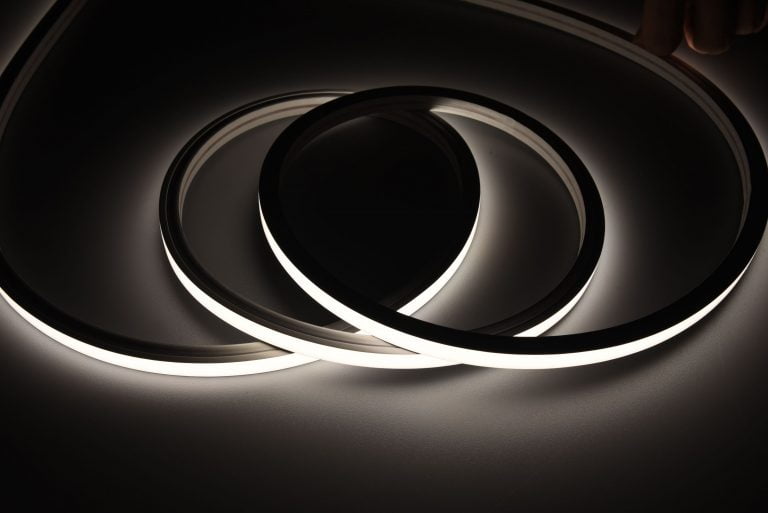
Manufacturers often list IP rating and CRI on datasheets, but installation errors and inadequate channel selection (aluminium profile vs adhesive mount) change real-world outcomes. I prefer specifying an IP65 profile for outdoor-facing coves, and insisting on constant-voltage drivers with stable PWM dimming to reduce flicker. Look—this isn’t indulgence; it directly affects customer complaints. Also, DMX controller compatibility is not a checkbox; it needs pinout and signal integrity checks before mass orders are confirmed. That hands-on verification step saved one client a costly replacement two months later—unplanned returns dropped by 18% after we enforced it.
Why do suppliers and spec sheets disagree so often?
Suppliers describe ideal conditions. Installers face humidity, long cable runs, and late schedule changes—different realities. I’ve learned to reconcile both by demanding measured test samples and written feed-point plans before approving bulk shipments. — and that test sample once saved a wedding reception when the marquee arrived with a wrong batch.
Looking Ahead: Practical advances and a few case notes
Case example: last November I worked with a chain of cafés in Pune that wanted consistent outdoor ambience on a tight budget. We moved from non-waterproof indoor tape to a properly specified LED strip lights outdoor solution housed in IP67-rated profiles, with edge feeds every 8 metres to mitigate voltage drop. The result was predictable colour temperature across all facades and a measurable 22% reduction in call-backs in the first quarter. That project contrasted starkly with another job where a cheaper, single-feed approach required rework—materials wasted, labour doubled.
Looking forward, the principles that matter are straightforward: sensible feed-point design, realistic driver selection (constant-voltage vs constant-current), and field-testing samples under real environmental stress. Newer modules with improved CRI and tighter binning help, but they don’t override poor system design. I expect vendors to offer clearer run-length charts and to bundle compatible power converters with longer warranties—small moves that remove guesswork. What’s next is not flashy tech; it’s better specification and verification on procurement lists. — I can almost hear procurement teams nodding.
What’s Next for wholesale buyers?
Evaluate any supplier by these three metrics: run-length planning clarity (do they provide voltage-drop tables?), driver pairing (are compatible power converters specified?), and environmental suitability (clear IP rating and thermal data). Ask for a two-metre test roll and a driver sample before signing for hundreds of metres. I recommend recording a simple lumen test at installation and keeping the result in the project folder—quantifiable checks reduce disputes later.
In my experience, small upfront checks save weeks of delay and tangible cost. For reference: a poorly planned 200m perimeter run in Goa in April 2021 cost the client a 6-day closure and a 14% cost overrun because the wrong driver type led to repetitive failures. That kind of real number is why I press for measurable specs, not marketing claims. If you want a reliable partner, work with suppliers who document these items and respond with clear mitigation plans.
I stand by practical, tested choices rather than buzz. For those who buy lighting at scale and live with the consequences, a blend of measured testing and sensible specification is where you’ll save the most time and money. For further sourcing or to discuss sample testing, consider LEDIA Lighting as one verified source I have worked with in larger commercial runs.