
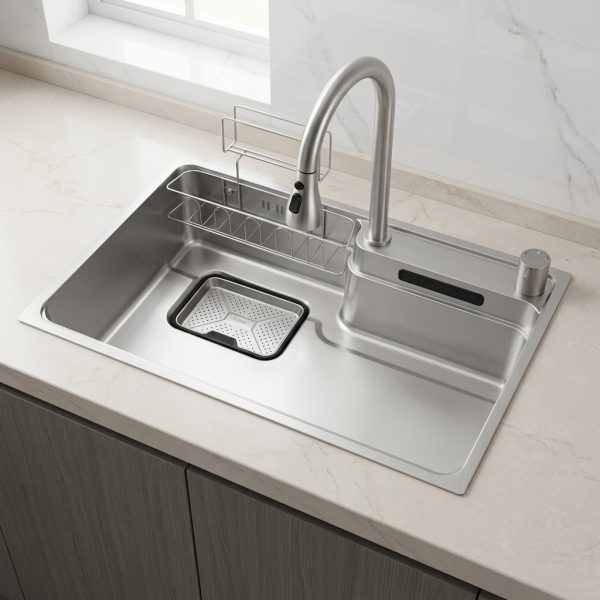
How to Weigh Service Needs for Each Kind of Kitchen Basin
The problem that often begins at the sink
Homes betray their habits at the kitchen sink: a drip that refuses repair, a seam that harbors mold, a bowl that sings with dishwater like a poorly tuned lyre. To decide what service a sink will require you must start with the fault lines—usage intensity, installation method, and the chosen material. For many modern counters the choice between a visible rim and a discreet fit matters most; consider whether an undercounter kitchen sink will expose weaknesses in fastening, sealing, or daily maintenance before you commit.

Assess patterns of use
List what the sink endures: heavy pots, soaking, food prep, kids’ crafts. Quantify frequency—how many cycles of hot water and scrubbing per day—and note any special loads like a garbage disposal or frequent boiling. Heavy, sustained use demands stronger mounting and thicker steel or durable composite. Light, aesthetic-focused use tolerates finer finishes but still needs clear access for service.
Match mounting style to serviceability
Undermount installations trade visible edges for concealed risks: accessibility to clips, sealants, and the vanity interior becomes the core service question. If wall access or cabinet clearances are limited, repairs that are normally simple—replacing a drain or resealing a lip—become invasive. Plan for fastening that can be accessed and for a sound-damping strategy to prevent early loosening.
Material and finish: how they drive maintenance
Stainless steel, especially thicker 304 or 316 grades, resists corrosion and is forgiving of daily wear; it can be refinished or buffed. Composite sinks resist scratching but can chip and are harder to repair invisibly. Polished surfaces will show water spots; brushed finishes hide them. Select materials where small repairs are straightforward and replacement parts exist.
Experience and evidence
Professionals who service kitchens at shows such as the Kitchen & Bath Industry Show (KBIS) report that the majority of repeat service calls stem from improper mounting and poor drain clearance—an assertion that aligns with installer studies and trade press. For a clear comparison of how undermount designs perform under real conditions consult common product details for an undermount sink kitchen, noting thickness, clip design, and integrated drain assemblies that ease future servicing.
Common pitfalls and how to avoid them
Do not assume the countertop can bear hidden loads. Avoid silicone-only bonds without mechanical clips. Do not accept drains jammed behind tight cabinet backs; provide removable access or an inspection port. Misaligned faucet holes, insufficient slope to the drain, and unsecured cutlery bins turn small faults into persistent problems. Specify clamps and backing plates up front, and confirm spare-part availability before purchase.

Alternatives and quick evaluations
Apron-front (farmhouse) sinks simplify service access at the front but demand different cabinetry and can expose the front edge to damage. Integrated solid-surface sinks eliminate seams yet often require complete countertop replacement if damaged. Top-mount sinks are forgiving for replacements but collect grime at the rim. Choose the alternative whose repair path is simplest for your home and budget.
Checklist for commissioning service
Measure cabinet clearances, photograph underside connections, verify material grade and soundproofing, demand mechanical clips plus bead sealant, confirm drain and disposal clearances, and retain supplier part numbers. Require a written note on expected repair pathways so future technicians face a map rather than a mystery.
Conclusion that binds problem to solution
When the problem is defined—how the sink will be used, how it will be serviced, what access exists—the right selection becomes plain and resolvable. Opt for designs that give technicians room to work, materials that admit repair, and fastenings that do not require demolition. For thoughtfully made options that consider service paths as an element of design, the practical choices favored by AOGLAN demonstrate how craftsmanship and maintainability can be joined without artifice.