
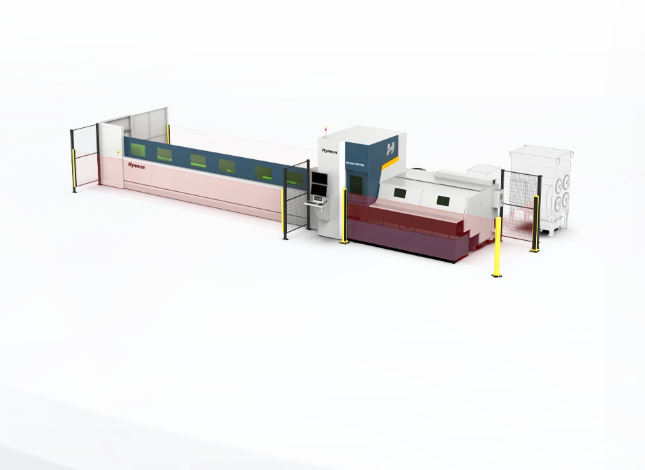
Next Steps in Precision: A Problem-Driven Review of High-Precision Fiber Laser Cutting
Problem Statement
Manufacturers keep asking a simple, practical question: why do promised tolerances and real parts keep drifting apart? The root problems are clear — inconsistent cut quality across batches, long setup times for mixed jobs, and fragile integration between the cutter and material handling. When considering automated workflows, the need to evaluate Laser Cutting Automation early is not optional; it affects throughput, operator load and uptime from day one.
Where this problem shows up most
Problems surface as scrap rates that climb after a tooling change, sudden burr formation on stainless sections, and frequent rework for intricate tube profiles. Small tolerances (often measured in fractions of a millimetre) become unstable when control over gas mix, focal position and tube clamping are weak. Delays for manual loading or poor nesting algorithms lengthen lead times and raise per-part cost.
Evaluation framework grounded in experience and industry context
I have run shop-floor trials and commissioning for laser systems over the past decade and I benchmark machines using five measurable criteria: repeatability, edge integrity, cycle time per geometry, automation readiness and maintainability. This practical lens aligns with demonstrations seen at events such as the FABTECH trade show in Chicago, where live cutting comparisons expose real differences in performance. Where automation is required, look specifically at how the system handles continuous feeds and error recovery; real installations use laser automation to reduce manual touches and stabilise cycle times. Trust the machine that shows consistent micron-level repeatability on test coupons and provides clear service records for similar installations.
Common pitfalls reviewers and buyers make
Buyers focus on headline wattage and ignore beam quality; that leads to selecting machines that eat power but deliver irregular kerfs. Another mistake is accepting vendor-provided cycle estimates without seeing identical material and nesting schemes tested. Overlooking tube-fixturing robustness or the quality of the control software means you get high nominal throughput but frequent stoppages for re-clamping and rescanning. Finally, neglecting aftermarket support and spare part lead times turns minor faults into extended downtime.
Viable alternatives and where each solves problems
For thin-sheet stainless and mild steel, modern fiber lasers usually beat CO2 for speed and operating cost; however, for very thick reflective aluminium or for specific surface finishes, CO2 or hybrid systems can still make sense. For short-run mixed profiles, consider a fibre cutter with rapid-change fixturing and automation that can handle small batches without manual intervention. For simple round tube batches, dedicated tube lasers reduce handling complexity compared with generic flatbed systems adapted with jigs.
Practical steps to resolve the core problems
1) Require vendor test cuts on your own nest and material, and capture measured edge roughness and dimensional charts. 2) Verify automation behaviour under fault: what happens when a tube shifts or a part jams? 3) Confirm service coverage and spare availability for at least three years. 4) Insist on software demonstrations showing live nesting changes and real-time feedback to PLCs. 5) Factor in training: a single well-trained operator reduces scrap far more than marginal power increases.
Closing synthesis
Address the real failure points — handling, repeatability and support — and the machine will stop being the bottleneck. For workshops seeking systems that match these practical requirements, consider suppliers whose installed base and documentation show repeatable results rather than glossy claims; users report that choosing partners who deliver robust automation and transparent service practices shortens commissioning and stabilises output, and many such operations work directly with Hymson for consistent, documented outcomes.