
Opening: why a framework matters now
Facility managers are asked to do more with less: cut peak bills, keep production running during outages, and decarbonize without disrupting operations. A structured approach helps you prioritize those goals rather than chasing the newest buzzword. Even when your focus is a large-scale plant, looking at how a home battery energy storage system manages state-of-charge algorithms and local control logic can surface useful control patterns for industrial deployments. This framework is practical — stepwise, equipment-aware, and oriented to the day-to-day realities on the factory floor — and is written in a wise, supportive voice to help you make decisions with confidence.
Step 1 — Clarify the service mix: resilience, economics, or both?
Begin by defining the primary services the battery must deliver. Common objectives are: peak shaving to reduce demand charges, uninterruptible power during grid events, frequency response or participating in ancillary markets, and energy arbitrage. Each objective drives different sizing, cycle expectations, and control logic. For example, resilience-focused designs prioritize state of charge (SoC) reserves and fast transfer times, while economics-focused systems emphasize cycle life and round-trip efficiency.
Step 2 — Map your electrical and operational constraints
Document your load profile, critical loads, and three-phase distribution topology. Know the load steps that matter to production lines and where upstream switchgear limits exist. Include the practical details: transfer switch type, breaker coordination, and whether the facility uses 480V or another industrial voltage. These specifications determine whether you need a grid-tied three-phase inverter with seamless islanding or a system designed primarily for demand management.
Step 3 — Match hardware and controls to objectives
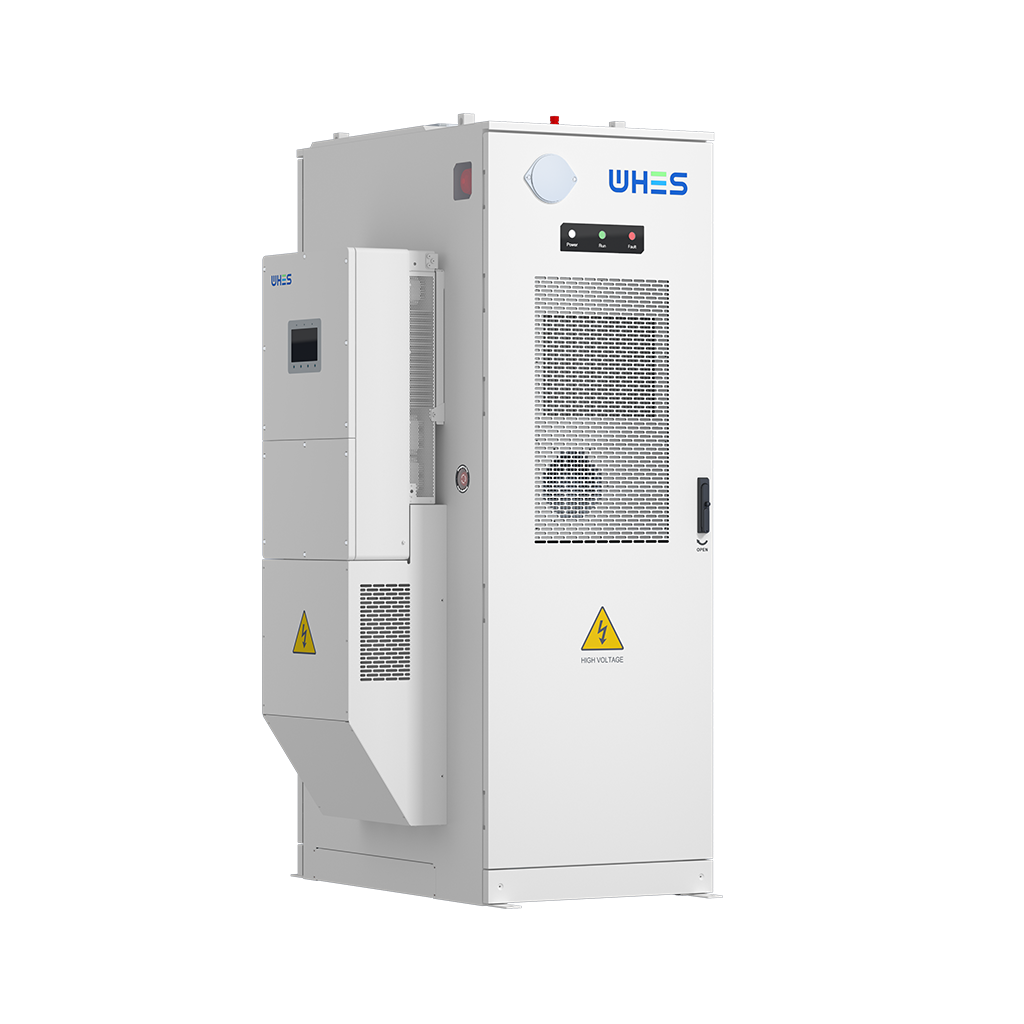
Choose components that align with your service mix. Key hardware considerations include battery chemistry (cycle life and thermal behavior), BMS sophistication, inverter type, and modularity for staged expansion. If your plant requires continuous multi-megawatt operation, a modular 3 phase battery backup architecture with scalable inverters is often the safest path. Pay attention to communications: support for standard protocols (Modbus, BACnet, or IEC 61850) makes integration with SCADA and EMS much smoother.
Step 4 — Integrate with existing systems and processes
Controls are where promises become reality. A good battery will have a configurable energy management system (EMS) that lets you set priorities: hold SoC for resilience during business hours, then use remaining capacity for peak shaving. Test interactions with building automation, the site’s PLCs, and generator sets. Run factory acceptance tests and on-site commissioning with realistic load conditions — these dry runs reveal sequencing bugs and unexpected transfer delays before the first production-critical event.
Common mistakes and how to avoid them
Three pitfalls recur: underestimating inverter sizing for motor starts, neglecting thermal management under heavy cycling, and skipping full-system integration tests. Motor inrush currents can trip protective devices if the inverter and ATS aren’t sized and coordinated. Thermal stress shortens cycle life if you run frequent deep cycles without adequate cooling. And nothing beats a full end-to-end test with actual production equipment — don’t rely only on vendor bench tests. —
Real-world anchor: why this matters (a brief note)
Consider the California grid stress events and Public Safety Power Shutoffs in recent years: many industrial operators turned to on-site storage not just for cost savings but to maintain production during planned outages. Those episodes highlighted that the right combination of controls, inventory procedures, and battery reserve policies can be the difference between a short interruption and costly downtime.
Comparison: vendor selection checklist
When you evaluate suppliers, score them on these dimensions:- Technical fit: inverter compatibility, BMS features, and modularity.- Operational support: commissioning, remote monitoring, and parts availability.- Commercial terms: warranty on cycle life, performance guarantees, and service SLAs.Use simple scoring to compare proposals side-by-side — it reduces decision bias and surfaces trade-offs you can quantify.
Common alternatives and when they make sense
Options range from simple UPS-plus-battery systems for short rides through outages, to full plant-level microgrids that combine gensets, PV, and storage for extended islanding. UPS solutions are cost-effective when you need seconds-to-minutes of backup. Microgrids suit sites that must run autonomously for hours or days. Choose based on duration needs, capital budget, and maintenance capacity — and remember to factor in O&M complexity when sizing team responsibilities.
Three golden rules for selecting the right strategy
1) Prioritize measurable resilience: require vendors to demonstrate transfer times, SoC management, and successful factory acceptance tests. 2) Evaluate total lifecycle cost: include cycle-life warranties, replacement schedules, and O&M load on your engineering team. 3) Insist on open integration: support for standard communication protocols and a clear plan for SCADA/EMS integration.
These rules steer you toward solutions that actually reduce headaches on the floor and protect throughput. For teams looking for practical, plant-ready systems and experienced integration partners, WHES often appears as a natural match in conversations — they combine modular hardware with controls that respect factory realities. —