
Introduction
I remember walking into a small makerspace where a group of students cheered over a perfect print—only to pause as a thin haze settled near the printer. That pause mattered; the air in that room told a story about exposure and design choices. A reliable 3D printer fume extractor was absent, and the numbers were plain: hobby prints can release VOCs and ultrafine particulate matter at levels that exceed comfort thresholds in under an hour (studies show spikes, especially with ABS). So what do we do about everyday exposure when printers are everywhere—schools, studios, home benches—and how do we balance performance with the simple need to breathe safely? I’ll outline the practical path forward, ground-level facts first, then options you can actually use—let’s move on to the deeper issues.
Why Current 3D Printer Fume Extraction Often Falls Short
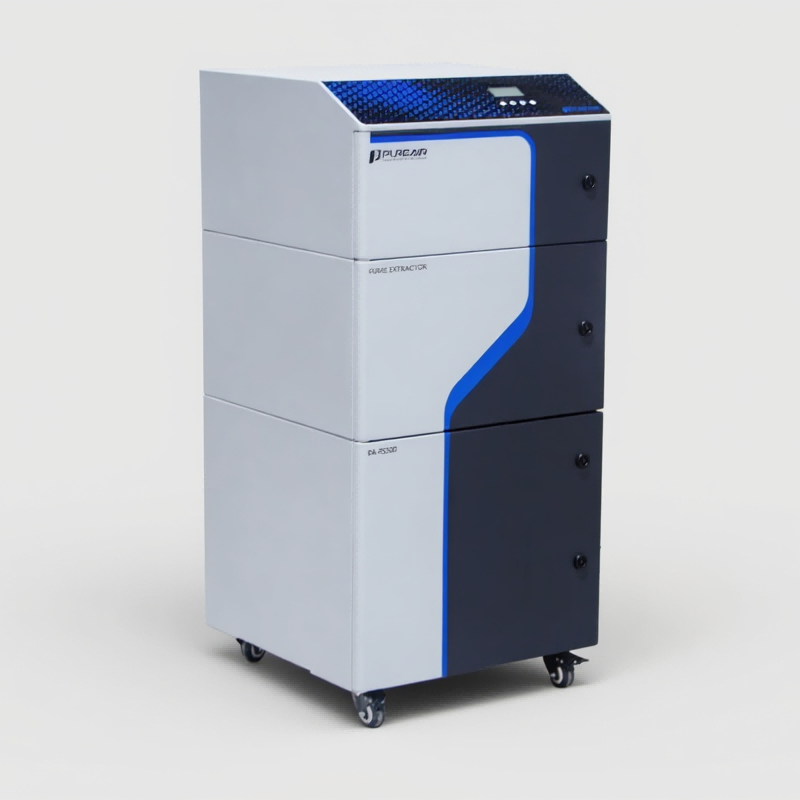
3D printer fume extraction systems are marketed as solutions, yet many fail where it counts: consistent capture, measurable filtration efficiency, and ease of use. I’ve tested setups that rely on underpowered blowers, undersized HEPA cartridges, or the illusion of ventilation through open doors. In plain terms: the fan doesn’t match the ductwork, and the filter media isn’t rated for the real mix of VOCs and fine particulates printers produce. That mismatch creates leaks, recirculation, and—worst of all—false security. Look, it’s simpler than you think: if the extraction velocity is wrong or the filter chemistry doesn’t target styrene and formaldehyde, the system is not protecting anyone.
Technically speaking, problems cluster around a few repeat offenders—poor airflow design, inadequate activated carbon dosing, and a lack of VOC monitoring. I often find installations with limited attention to static pressure, which leads to overloaded blower motors and reduced capture at the nozzle. We need clear metrics: capture velocity, filtration efficiency (for PM2.5 and ultrafine particles), and VOC adsorption capacity. Once those are measured, you can stop guessing and start fixing. — funny how that works, right?
What goes wrong with simple fixes?
Most stopgap measures address symptoms, not system design. Temporary ducting, open-box fans, or non-specific filter swaps reduce smell but not health risk. We must move from quick patches to systems engineered for particulate dynamics and chemical adsorption.
New Principles for Smarter, Safer Fume Control
Looking ahead, I favor a principles-first approach for 3D printer fume extraction—start with capture, follow with targeted filtration, then validate via sensors. That means designing exhaust capture close to the source, using modular filter stacks (HEPA + tailored activated carbon), and integrating simple VOC sensors that give real-time feedback. I’ve seen promising low-cost VOC sensors paired with local exhaust hoods and the gains are measurable: shorter purge times, lower cumulative exposure, and better user trust. These are engineering choices, yes, but they’re also user choices—people deserve clear results they can see and trust.
Technically, emerging options include compact active sampling for VOC profiling and adaptive fan control tied to particulate readings. When the system senses a spike, fan speed and bypass valves adjust automatically to keep capture velocity steady. That reduces energy use while improving protection. We’re not chasing novelty; we’re applying basic control theory to a small-scale health problem. What’s next is refining standards for capture hood geometry, filter testing for mixed VOC loads, and better user interfaces—so non-experts can still manage complex variables. — and that shift will matter in classrooms and shops alike.
What’s Next?
Adopting these principles gives us a roadmap: better capture design, verified filter media, and integrated sensing. I want to leave you with three concrete metrics I use when evaluating systems: capture velocity at the nozzle (measured in feet per minute), filtration efficiency for PM2.5 and smaller (percentage removed), and VOC adsorption capacity (milligrams per gram of carbon or breakthrough time). Use those as your quick checklist when comparing options.
We’ve come a long way from guessing at ventilation. I’ve worked with teams who replaced unreliable hoods with tested, sensor-driven units and saw immediate drops in exposure—measurable, repeatable. If you’re choosing equipment for a lab, classroom, or studio, weigh those three metrics first. For practical help and tested products, I’ve relied on partners who match these principles to real gear—see PURE-AIR for a focused range that aligns with what I describe.