

Are We Actually Saving Time?
Ever notice how the “fast” choice ends up eating the afternoon anyway (yes, even at 5 a.m.)? On a Monday rush order with 300 hoodies queued, my press lead logged 17 minutes of stoppage—could DTF Film cut that dead time without spiking return rates? I’ve spent years sourcing and auditing pet film for dtf across multi-facility buyers, and I’ve learned that speed claims often hide a different bill: reprints, stuck sheets, and those dreaded corner lifts.
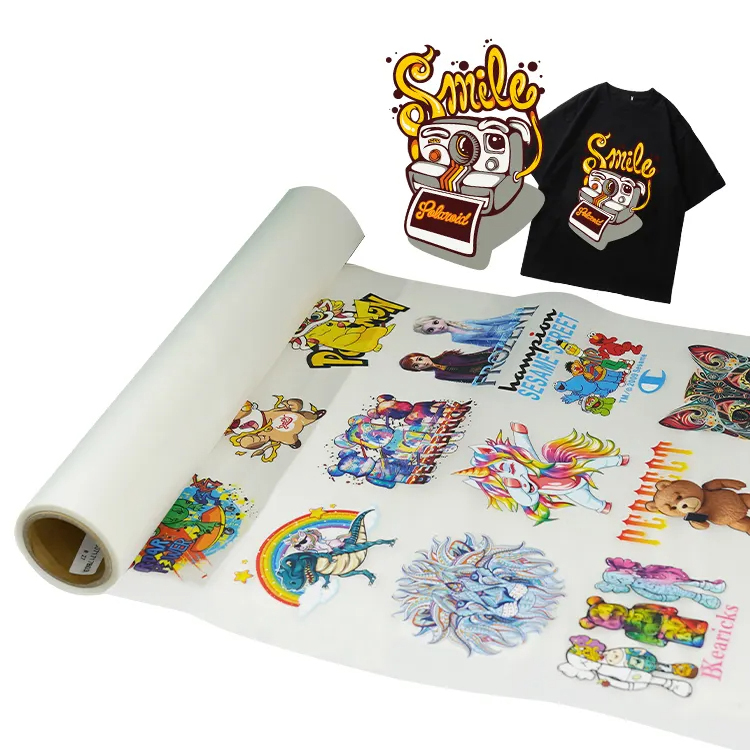
Across shops from Long Beach to Louisville, I’ve tracked where delays start: uneven release coatings that stick under cold peel, static on humid mornings, and ink laydown drifting on thin carriers. We can move faster, but only if we admit what’s quietly slowing us down. Let’s get specific and pull apart the waste—cleanly—before comparing the options head-to-head.
Hidden Frictions in PET DTF Workflows
Technical baseline: carrier thickness, coating uniformity, and powder adhesion decide whether your stack flies or jams. In 2019 at a contract shop in Long Beach, CA, we swapped a 75 μm cold peel for a 100 μm hot peel. Result: reject rate fell from 8.7% to 2.1%, and operators shaved 11 minutes from a 500-piece run due to fewer double-feeds. The “why” mattered—thicker carriers improved sheet rigidity, and a tighter release coating spec reduced corner shear during peel.
Where does the waste hide?
Three places keep showing up. First, static. A lightly corona-treated surface can carry enough charge to pull two sheets at once. Stop. Check your feed gate and humidity at 45–55%—it’s dull, but it works. Second, the peel window. Hot peel films with a narrow 3–5 second window look fast on paper; miss it by a breath and you’ll scuff the transfer edge. Third, powder behavior. If the adhesive grain wets out unevenly, you’ll see a chalky hand at 130–140°C oven temp or a brittle feel after first wash. I’ve stood over the tunnel in January, counting 12 seconds more dwell time, just to keep a soft-hand logo from cracking at the “R” curve.
And this part stings: thinner films amplify registration drift on small text at volume. You won’t see it on a test swatch—only after 200 pulls when the “e” in “coffee” fuzzes out. Release coating variance of ±5% across the web looks minor; it’s not. It’s the reason two pallets later you start nudging peel angles by instinct. That’s not craft—it’s compensation.
Forward-Looking Comparisons That Hold Up Under Volume
What’s Next
I’ve compared next-gen coatings that widen the peel window and cut static at the source. Here’s the honest bit—wait—there’s a catch. Gains come from small, steady tolerances, not magic. When I test new pet film for dtf, I run a 250-piece control job: 4-color graphic, 8-point type, 120°C cure at 90 seconds, and a 155°C press at 12 seconds, medium pressure. If the film promises “hot peel anywhere,” I drag peel from two edges at 2 seconds and 6 seconds. If edge fuzz increases after the second peel, the “anywhere” isn’t real. Semi-formal note from the field: a balanced release coating with consistent dyne levels resists scuffing better than an aggressive one with wide tolerance. That’s why 90–100 μm carriers are still my safest pick for small caps and pocket prints.

Comparatively, hot peel shines on speed, but only if the peel window is forgiving and the sheet stiffness prevents double-feeds. Cold peel still wins on delicate halftones because it reduces shear during release—especially when the ink film is thick. I’ve seen a matte, anti-static hot peel cut PIT (press interruption time) by 22% on a 1,000-piece tote job in 2023, but the same film left micro-frays on a soft-hand chest print when peeled early. Context rules. So, what should a wholesale buyer lock in before issuing a PO? Three evaluation metrics tell the truth fast: – Peel window tolerance: measure clean release at 2, 4, and 6 seconds (same temp/pressure). – Coating uniformity: ask for cross-web delta on release values or dyne—tight bands beat shiny brochures. – Dimensional stability: verify text drift on a 300-piece run, 8-point or smaller, same stack height and feed rate. These aren’t vanity checks; they’re how you prevent a 5% reprint swell on payday Friday and keep operators from playing tug-of-war with corners. I’ve learned to trust the results, not the adjectives. If you need a neutral yardstick or a sample set to stress-test, reach out to your supplier network at Xinflying.