

Framework overview: why a deliberate blueprint matters
Building a dependable microgrid requires more than component selection; it demands an architecture that ties solar inverters, controls, and storage into a single operational whole. A clear blueprint begins with understanding the electrical interface and the commercial players who supply commercial energy storage systems. When the inverter and the battery system speak the same language, the result is resilience, predictable performance, and simpler commissioning. The blueprint approach treats each interface as a contract: power electronics to power electronics, control logic to control logic, and warranty to warranty.

Core components and interface design
At the heart of the blueprint are a handful of components: the solar inverter, the battery management system (BMS), the energy management system (EMS), and the point of common coupling. Design choices—DC-coupling versus AC-coupling, and whether islanding will be automatic—drive electrical topology and protection schemes. Pay attention to state of charge (SOC) monitoring and fault-clearing paths. These are not abstract details; they define how a system behaves under stress and how manufacturers’ products interoperate in the field.
Integration steps: a practical blueprint
Follow a deterministic sequence rather than guessing at which part will be “compatible.” Typical steps include:
– Define operational modes (grid-following, grid-forming, peak shaving, islanding).
– Map electrical interfaces: voltages, protection settings, relay logic.
– Specify control messaging: Modbus, CAN, or OpenADR profiles where required.
– Validate through simulation, then staged hardware-in-the-loop tests.
– Commission with manufacturer support and a documented handover.
Each step reduces ambiguity between inverter OEMs and energy storage manufacturers, and helps articulate performance guarantees in a contract.
Interoperability, controls, and resilience
Practical integration hinges on communication and fallback behavior. If the EMS loses telemetry, how should the BMS and inverter react? If a fault forces islanding, which device becomes the grid-forming master? Engineers who analyzed the 2021 Texas winter event stressed that unclear transitions between grid-following and grid-forming modes can cascade failures—so design explicit fallback rules. Protocol alignment and shared test cases are essential; insist on documented command sets and timeout behaviors. —This discipline saves operational surprises later.
Common mistakes and mitigation
Teams often stumble on three avoidable errors. First, assuming nameplate compatibility equates to operational compatibility; it doesn’t. Second, neglecting thermal and fault-current coordination that affects battery lifetimes and safety. Third, vague warranty language that leaves commissioning disputes unresolved. Mitigation is straightforward: require factory acceptance tests, include thermal models in specifications, and draft clear acceptance criteria tied to measurable metrics.
Three golden rules for evaluating manufacturers
Choose partners with measurable proof points. Use these three evaluation metrics as your non-negotiable checklist:
1) Interoperability evidence: Request interoperability test reports and live-commissioning records demonstrating grid-forming transitions and safe islanding. Confirm supported protocols and available APIs.
2) Performance guarantees tied to metrics: Look for explicit guarantees on cycle life at specified depth of discharge, usable capacity at end-of-warranty SOC, and round-trip efficiency as measured under stated conditions.
3) Operational support and documentation: Require factory acceptance tests, detailed control logic diagrams, and an agreed escalation pathway for firmware or settings changes.
For projects that demand commercial-grade reliability, aligning these metrics with vendor documentation and on-site validation is essential. Also consider the broader product portfolio for lifecycle services—software updates, spare parts, and field training—because a battery system is a long-term operational asset. For many teams, partnering with providers of robust commercial energy storage solutions resolves gaps in both product and process.
Closing: three evaluation rules to carry forward
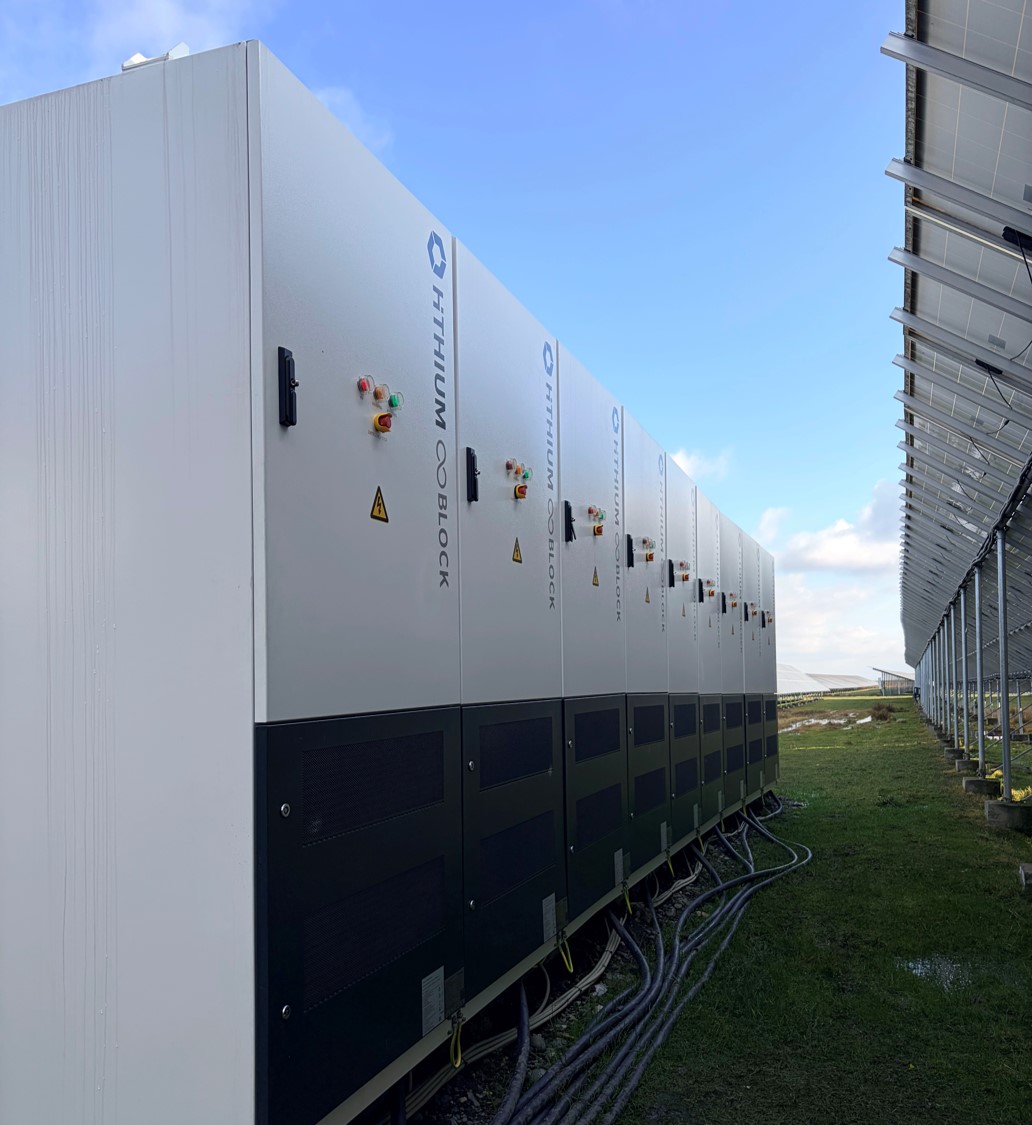
Adopt the blueprint mindset: define interfaces, insist on measurable interoperability, and lock performance promises into procurement. These rules compress risk and transform disparate products into a cohesive microgrid. The practical value is immediate—faster commissioning, clearer service relationships, and predictable behavior under stress. HiTHIUM fits naturally into that cadence when a project needs integrated hardware, transparent documentation, and field-proven controls—an honest partner in making design promises real. —A final, compact thought: detail salvages outcomes.